
Attendance
At Grange we believe we offer a supportive approach to attendance and encourage our families to contact us should there be any barriers to your child arriving at school on time every day. In preparation for September 2024 and the new rules around attendance please ensure you read the following and review any holiday plans during term-time you may have as a family.
New Attendance Rules Parents Need to Know for September 2024
You will know that if a child misses just one day of school, that is one day’s worth of education lost. If it’s more than one day, those losses will be cumulative and the effect on long-term prospects could not be more damaging. Prior to Covid, absenteeism had been on the decline, but since the lockdowns, it appears attitudes towards attendance have changed and we are now seeing a steep increase in absenteeism once again - around 380,000 fewer pupils were persistently off school last year than the year before. This does not take into account the number of children not attending school due to SEND/SEMH.
Ministers have now published guidance on managing school attendance that will become mandatory from September 2024. Here's what you need to know.
£80 fines and Improvement Notices
Absence fines charged to parents will rise from £60 to £80, or £160 if not paid within 21 days. From Autumn term 2024, only two fines can be issued to the same parent for the same child within a three-year rolling period. Any notice thereafter will automatically be charged at £160. Parents will also receive "improvement notices", where they are are informed that this is their last opportunity to engage with education and improve their child's attendance before a fine is issued.
National fine thresholds
From September, schools will have to consider a fine if a pupil misses 10 sessions (half days) of unauthorised absence in a rolling period of 10 school weeks. They should “not have a blanket position of issuing or not issuing penalty notices”. The threshold can be met with “any combination of unauthorised absence”. For example, four sessions in term time plus six instances of arriving late.
Long-Term Sickness to be Flagged with Local Authorities
Schools will have to give councils the name and address of sick pupils who they believe will miss 15 consecutive or cumulative days. Schools will also be “expected to inform a pupil’s social worker and/or youth offending team worker if there are unexplained absences from school”.
Mental Health Awareness
All schools should now be particularly mindful of pupils absent from school due to mental or physical ill health or their special educational needs and/or disabilities and provide them with additional support.
The guidance acknowledges “many children will experience normal but difficult emotions that make them nervous about attending school, such as worries about friendships, schoolwork, examinations or variable moods”. But it is “important to note that these pupils are still expected to attend school regularly”.

|
New responsibilities for attendance - from August 2024 | [pdf 202KB] |

|
| Please check what your responsibilities are, as a parent, for your child's attendance. | |||
|
|
Attendance Matters | [pdf 767KB] |
|
|
|
Working together to improve school attendance - Parents Responsibility | [pdf 173KB] |
|
New Attendance Rules Parents Need to Know for September 2024
New Government Penalty Notices (September 2024)

|
|
Summary guidance for PNs 2024 TJW | [pdf 363KB] |
|
 |
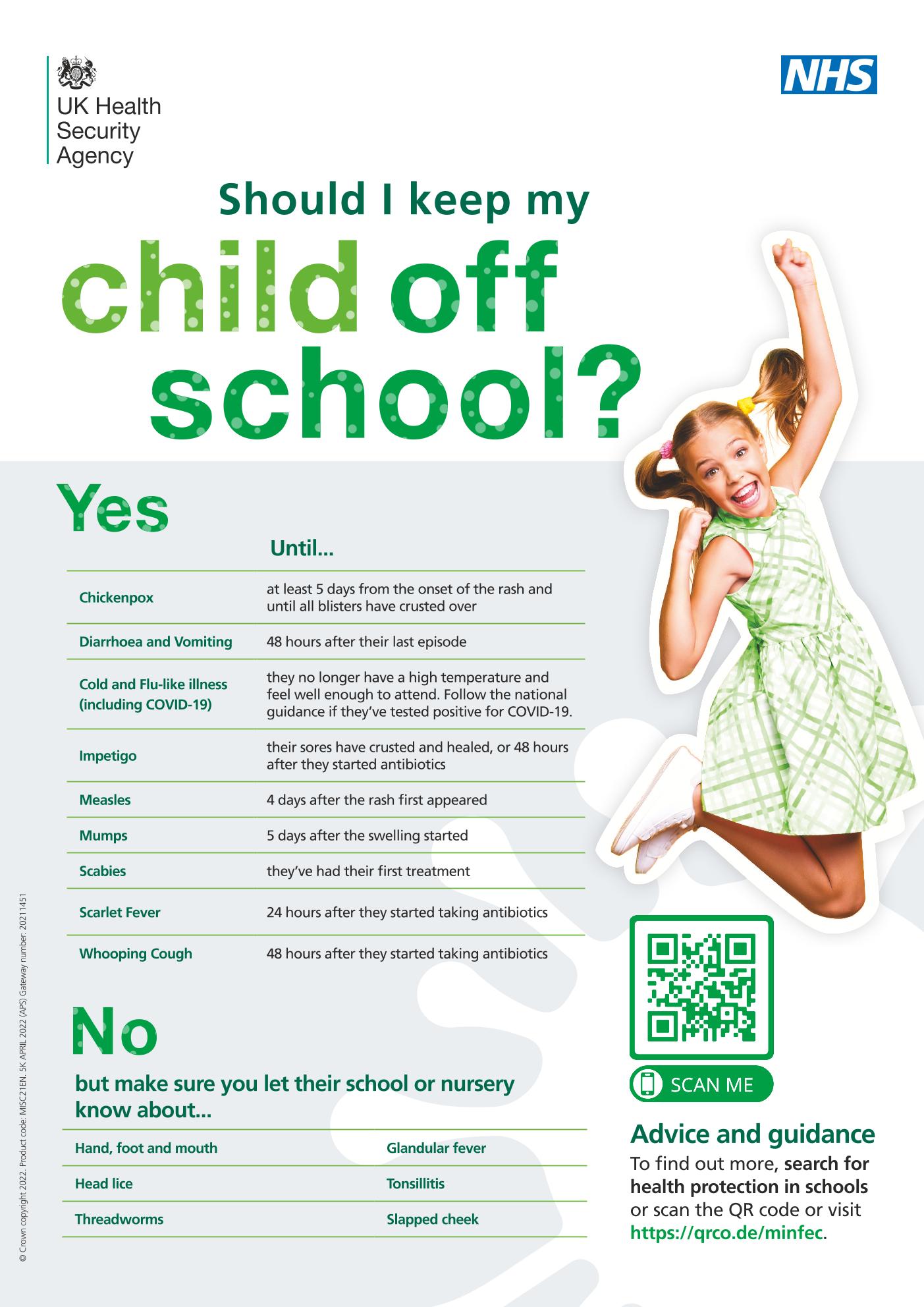
Is my child too ill for school? |
| It can be tricky deciding whether or not to keep your child off school, nursery or playgroup when they're unwell. There are government guidelines for schools and nurseries about managing specific infectious diseases at GOV.UK. These say when children should be kept off school and when they shouldn't. | |
|
Guidance for parents on school attendance |
| Members of the Attendance Action Alliance have worked with the Department for Education to develop this short guide which helps parents understand how they can work with their school and local authority to support their children to attend school and get the right support. |